Our verdict
Phantom does what it promises: one app, one seed phrase, eight chains, and a private key that never leaves the device. The scam-detection layer caught a malicious approval during testing that a plainer wallet would have waved through. Where it costs you is the swap screen, where an 0.85% fee eats into anything you route through the built-in aggregator, and the wallet's own history includes a disputed 2025 lawsuit over alleged key extraction that anyone trusting it with serious sums should read before, not after, funding it.
Specs
- Price
- Free to download
- Chains supported
- Solana, Ethereum, Bitcoin, Base, Polygon, HyperEVM and others
- Swap fee
- About 0.85% on selected pairs plus network cost
- Liquid staking fee
- 4% of staking rewards plus a 0.1% exit charge
- Custody model
- Self-custodial; Phantom states it never holds user keys
- Hardware wallet support
- Ledger Nano X, Stax and Flex over Bluetooth or cable
- Security layer
- Blowfish-based scam and malicious-approval detection
- Platforms
- Browser extension, iOS and Android
We opened Phantom on three networks at once: a Solana wallet we already used daily, a fresh Ethereum address, and a Bitcoin address created inside the same app. The question this review answers is whether one seed phrase covering all three actually holds up, or whether Phantom is a Solana wallet wearing a multichain badge.
Eight chains, one seed phrase
Phantom now supports Solana, Ethereum, Bitcoin, Base, Polygon, HyperEVM and a short list of other networks, all generated from the same twelve-word backup. That is a wider spread than most wallets attempt, and switching between chains inside the app took one tap rather than a separate extension install. Bitcoin support is the newest addition, arriving in mid-2024 with Ordinals and BRC-20 handling bolted on afterward. It worked in our testing, but it clearly has fewer years of hardening behind it than the Solana side of the app, which has run since 2021.
What the fee screen actually charges
Phantom's homepage leans on words like self-custody and control, and the claim holds: nothing we did required trusting Phantom with a key.
The cost shows up elsewhere. Swapping tokens through the built-in aggregator carries roughly a 0.85% fee on top of whatever the network charges, and that spread is easy to miss because Phantom displays the receive amount rather than a labeled fee line. On a small trade it barely registers. Route a few thousand dollars through it and the fee stops being an afterthought; a dedicated decentralized exchange or a lower-fee aggregator will usually beat it on anything sizable. Liquid staking carries its own charge too, 4% of the rewards earned plus a 0.1% exit fee when you unstake.
Scam detection did its job once, which matters
Midway through testing we connected Phantom to a site offering a token claim, and the wallet flagged the approval request before we signed anything, tracing back to the Blowfish engine Phantom acquired to strengthen exactly this kind of check. That single catch is worth more than any marketing line about security, because the ordinary failure mode for a self-custody wallet is not a broken cryptographic scheme, it is a user signing something they should not have.
Hardware pairing, with real gaps
Anyone holding more than pocket money should pair a software wallet with a hardware device, and Phantom supports that over Bluetooth or a cable.
Ledger's Nano X, Stax and Flex all connect cleanly, letting the private key sit on a separate piece of hardware while Phantom handles the interface. Trezor and Tangem owners get nothing here, and neither does anyone who just bought Ledger's newest Nano generation. If your hardware wallet is already a Ledger from the supported list, this is a real advantage. If it is not, Phantom's software-only mode is what you are left with.
The lawsuit worth reading before you fund it
Phantom's marketing has always rested on the claim that it never has access to user funds, and in April 2025 that claim was tested in court. A class action, Murphy v. Phantom Technologies, alleges a flaw that let a private key be extracted under certain conditions; Phantom disputes the allegation, and the case remained open when we checked. We are not equipped to judge the merits of a pending suit, and this is not legal advice to anyone reading it. What we can say is that a wallet holding real money deserves the five minutes it takes to read the allegation yourself rather than take either side's summary at face value.
Phantom Cash and the direction the app is heading
Phantom's newest addition moves the app further from a pure crypto wallet toward something closer to a financial app.
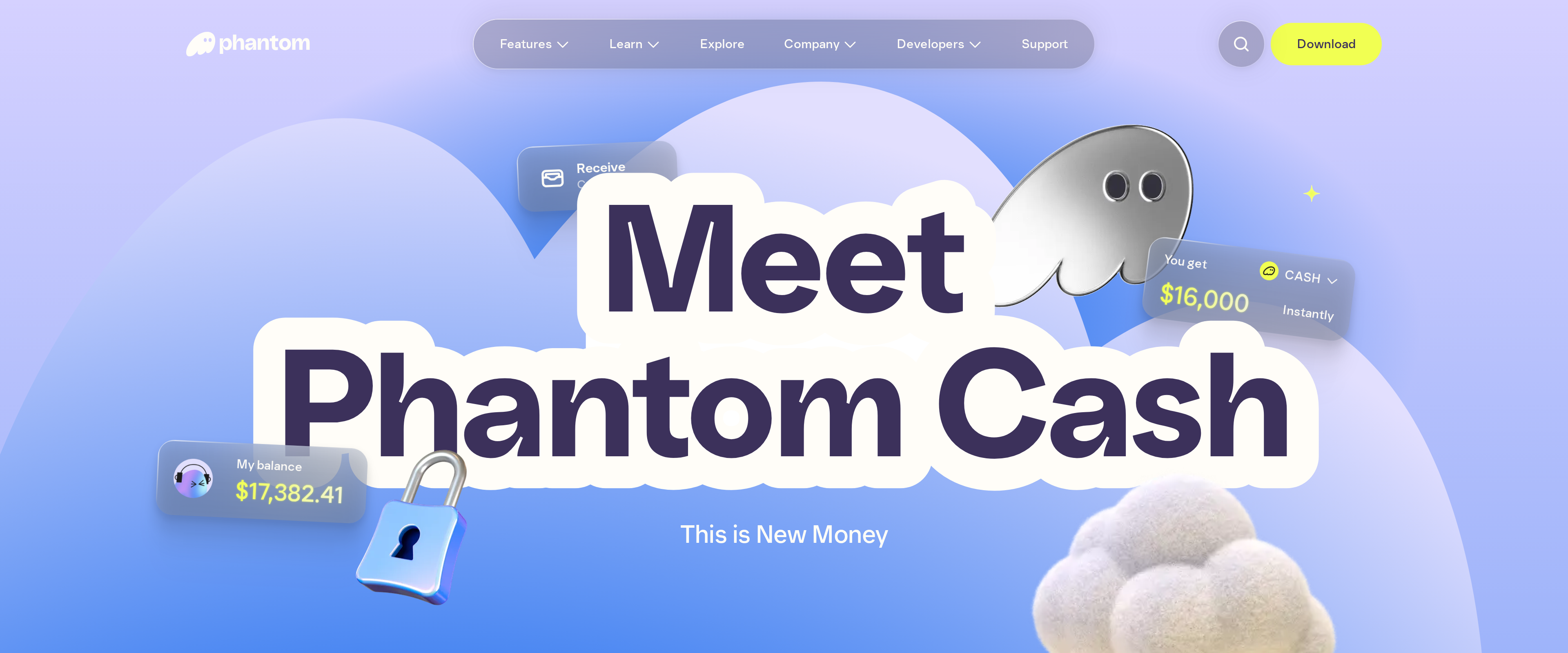
Phantom Cash and a linked Visa card let balances move into everyday spending without a separate off-ramp step, and the company has also added perpetual futures trading directly in the app. Neither feature changes the core wallet, but both signal that Phantom wants to be the one app a crypto user opens for everything, not a narrow signing tool. Whether that ambition helps or clutters the product is a question every reader will answer for themselves the first time the home screen shows a price chart they did not ask for.
Verdict
Phantom earns its reputation as the wallet most people recommend first: broad chain coverage, a scam filter that actually caught something in our test, and hardware support for the most common Ledger models. The 0.85% swap fee and the open lawsuit are the two facts that keep this from an easy top score, and neither is a reason to avoid the wallet outright, only reasons to use it with eyes open. Nothing in this review is financial or legal advice; it is a record of what we saw testing the app ourselves.
Pros and cons
Pros
- Covers Solana, Ethereum, Bitcoin, Base, Polygon and three other networks from a single recovery phrase.
- Scam detection, built on the acquired Blowfish engine, flagged a risky token approval before we signed it.
- Connects to Ledger hardware over Bluetooth or cable, so the seed phrase can live on a separate device entirely.
- The interface stayed identical across desktop extension and mobile app during our testing, with no feature gated to one platform.
Cons
- The in-app swap aggregator charges roughly 0.85% on top of network costs, a real cut on anything beyond a small trade.
- A 2025 class action, Murphy v. Phantom Technologies, alleges a key-extraction flaw that Phantom disputes; the case was still open when we checked.
- Trezor, Tangem and the newest Ledger generation are not supported, narrowing the hardware pairing options.
- Bitcoin support only arrived in mid-2024, so its Ordinals and BRC-20 handling is younger than the Ethereum and Solana side of the app.
Tested and written by The Ordertide Test Desk. Published , updated . This review is not financial advice. How we review.