Our verdict
Tangem replaces the part of hardware wallet ownership people actually get wrong, writing down and hiding a seed phrase, with a chip that generates and holds the key on the card itself. Setup took two minutes with a phone's NFC reader and produced nothing to write down at all. The trade is total: there is no seed phrase backup, so losing every card in a set locks the funds permanently, and a disclosed laser attack in July 2026 showed the chip can be defeated in a lab, even if only with equipment and access no pickpocket carries. Buy it knowing both facts, not just the marketing one.
Specs
- Two-card set price
- $59.90
- Three-card set price
- $69.90
- Tangem Ring price
- $160 for a ring plus two cards
- Secure element
- Samsung-made chip, EAL6+ certified
- Backup model
- Seedless; keys clone card-to-card over encrypted NFC
- Coverage
- 14,100+ tokens across 90 blockchains
- Independent audits
- Kudelski Security, Riscure and Cure53, no critical findings reported
- Known vulnerability
- July 2026 laser attack disclosure requiring lab conditions and physical possession
A hardware wallet with no screen sounds like a contradiction, so we ordered a Tangem set to find out whether a plastic card can really replace a device built around a display and buttons. Setup was the first test, and it took under two minutes: install the app, tap the card against the back of a phone, choose a PIN, done. No seed phrase appeared on screen, because none exists to write down.
Where the seed phrase goes instead
Every other hardware wallet we have tested generates a seed phrase and asks the owner to copy twelve or twenty-four words onto paper, a step people routinely photograph, store in a notes app, or lose outright. Tangem generates a private key inside the card's own chip and never exposes it, not even to the card's owner. Backup works by cloning the key to a second and third card over an encrypted NFC handshake, so a three-card set gives you three physical copies of the same wallet rather than one card plus a paper backup. It is a genuinely different model, and it removes the single most common way people lose crypto: mishandling a seed phrase.
The chip doing the actual protecting
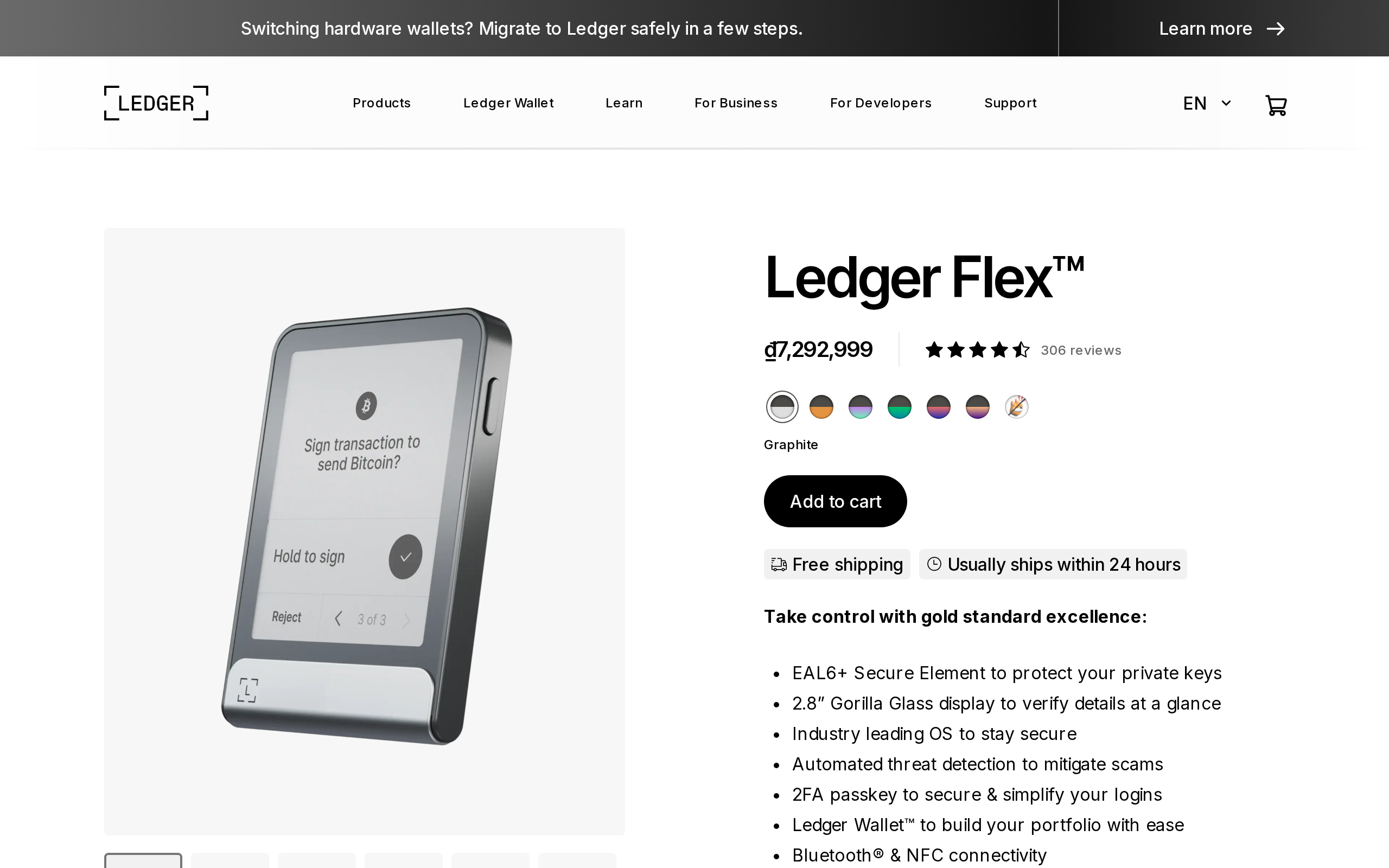
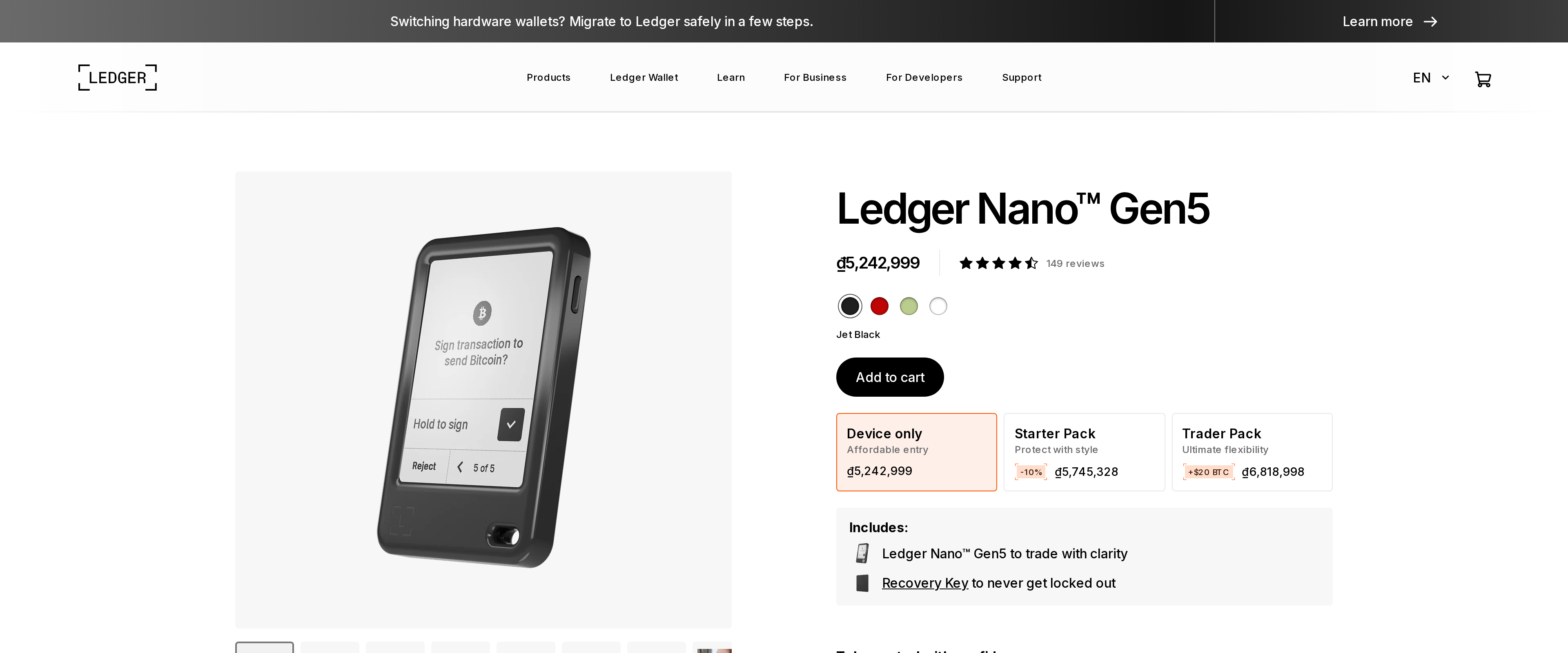
Tangem built the card around a secure element made by Samsung Semiconductors, certified to EAL6+, one level above the chip found in Ledger's Nano X.
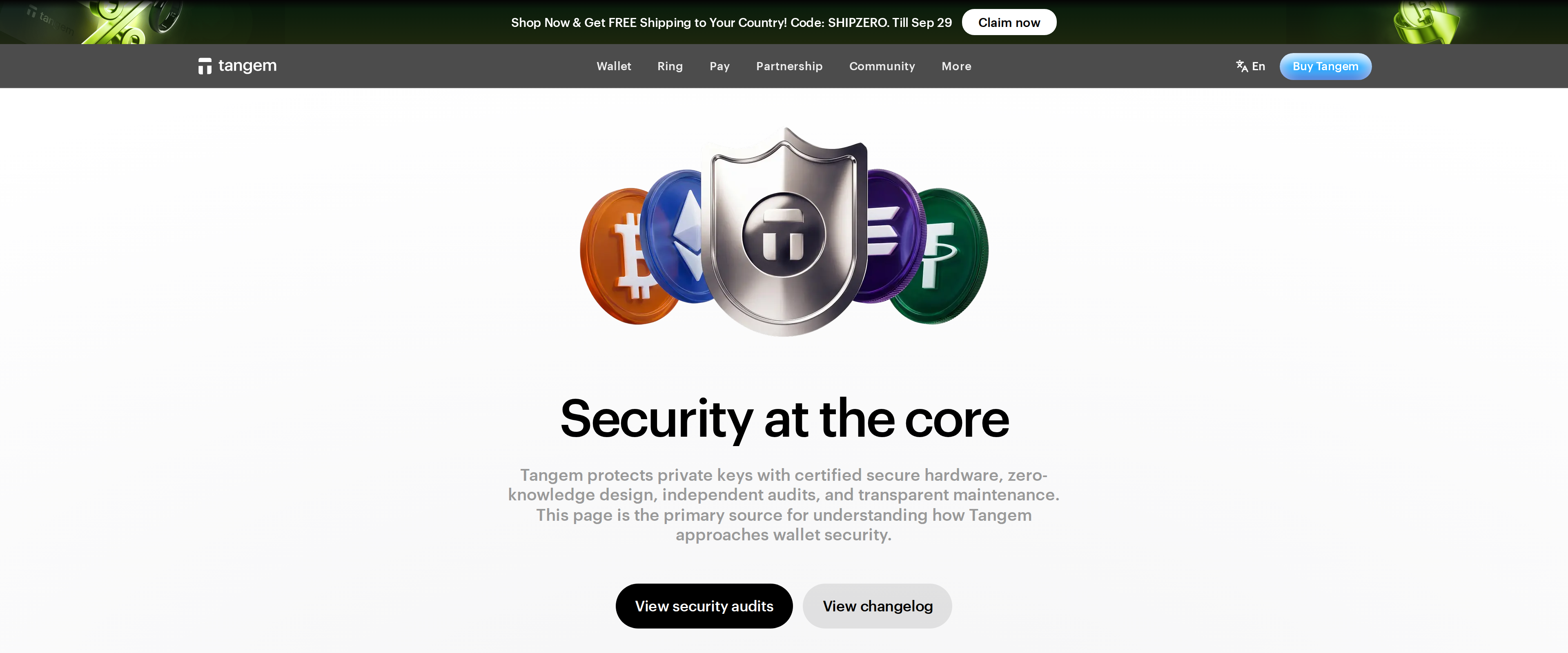
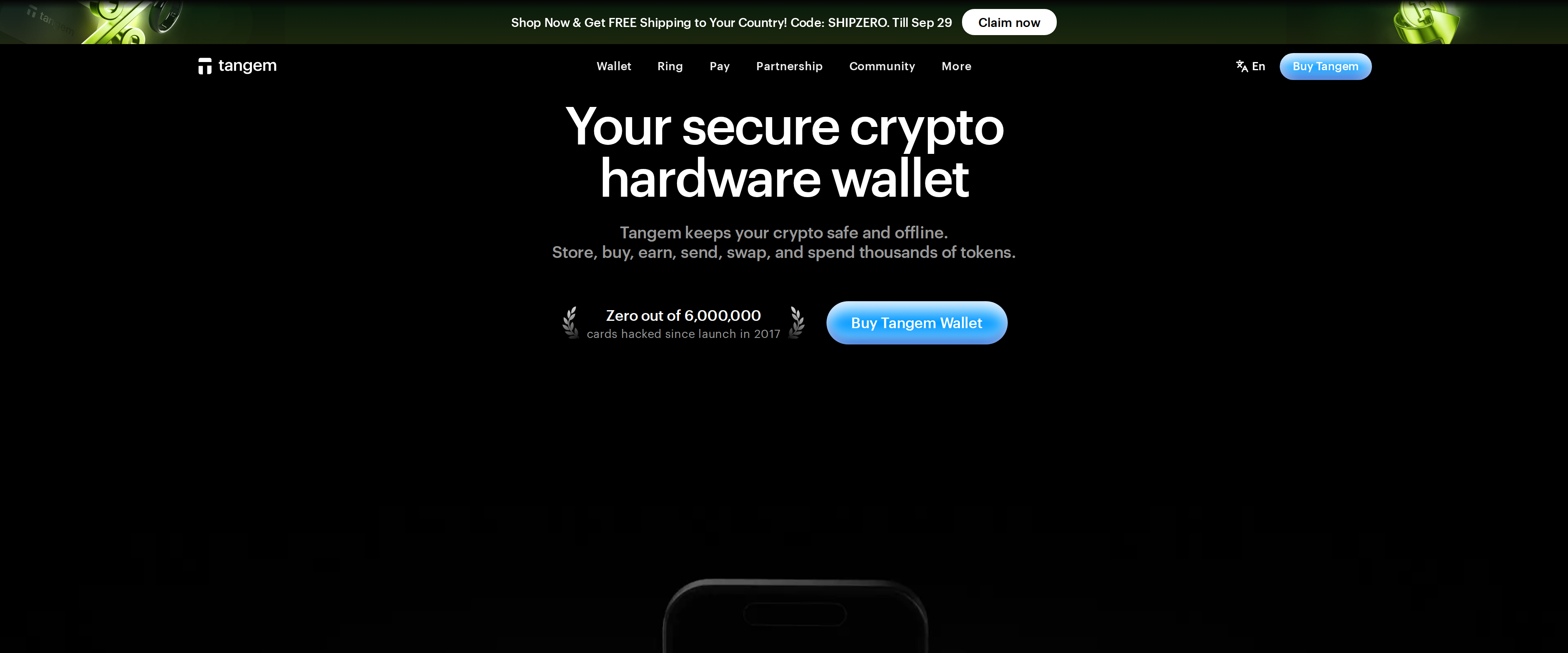
Three independent firms, Kudelski Security, Riscure and Cure53, have audited the design without reporting a critical flaw, and Tangem states that none of the roughly 6 million cards it has issued since 2017 have been compromised in the field. That is a strong record for a design this simple, and it held up until mid-2026, when a disclosure changed the picture slightly.
The laser attack, and why it does not change our recommendation much
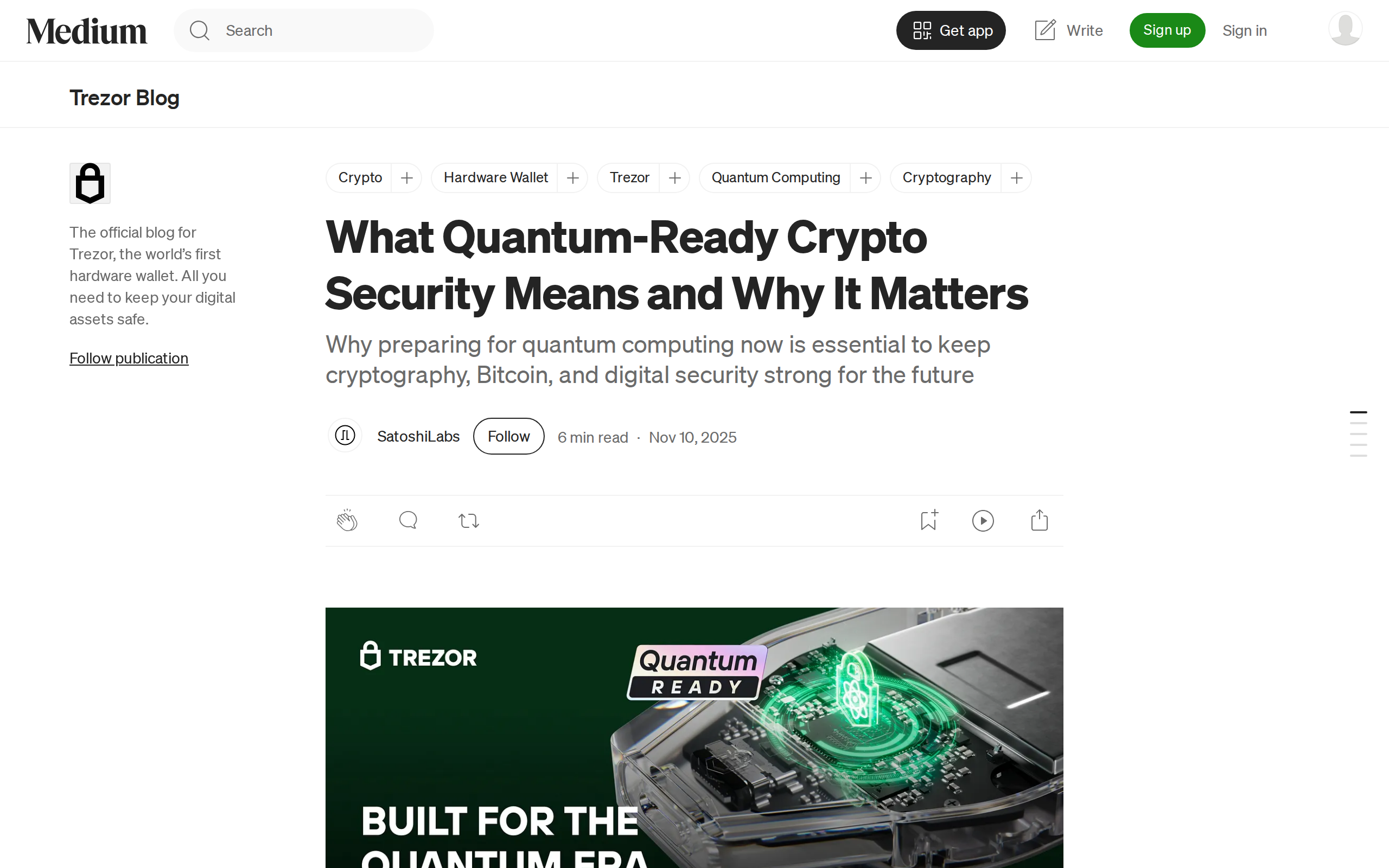
In July 2026, security researchers at Ledger's Donjon lab demonstrated a physical attack that reset a Tangem card's password without needing the existing code. The catch, and it is a real one, is that the attack required a laser, invasive lab equipment, and physical possession of the card itself, not a remote exploit or anything a phone thief could replicate on the street. Tangem confirmed the finding and noted that affected cards cannot be patched, since their firmware is fixed at manufacture rather than updatable. For a card kept at home or in a safe, this changes little. For anyone whose threat model includes a well-funded attacker who can steal a card and take it to a laboratory, it is worth knowing the floor is not infinite.
Cards, and now a ring
The physical form factor is also the biggest limit of the design: there is no screen, so a compromised or malicious app on the connected phone could in theory show a different destination address than the one actually signed.
Tangem's answer to variety, not to that specific risk, is the Ring, a wearable version of the same chip announced as the first ring-shaped hardware wallet on the market. It does not add a screen either; it is the same trust model in a different shape for people who would rather wear their wallet than carry a card.
What it costs
A two-card set runs $59.90 on Tangem's own store, and a three-card set, the configuration we recommend for anyone serious about redundancy, costs $69.90.
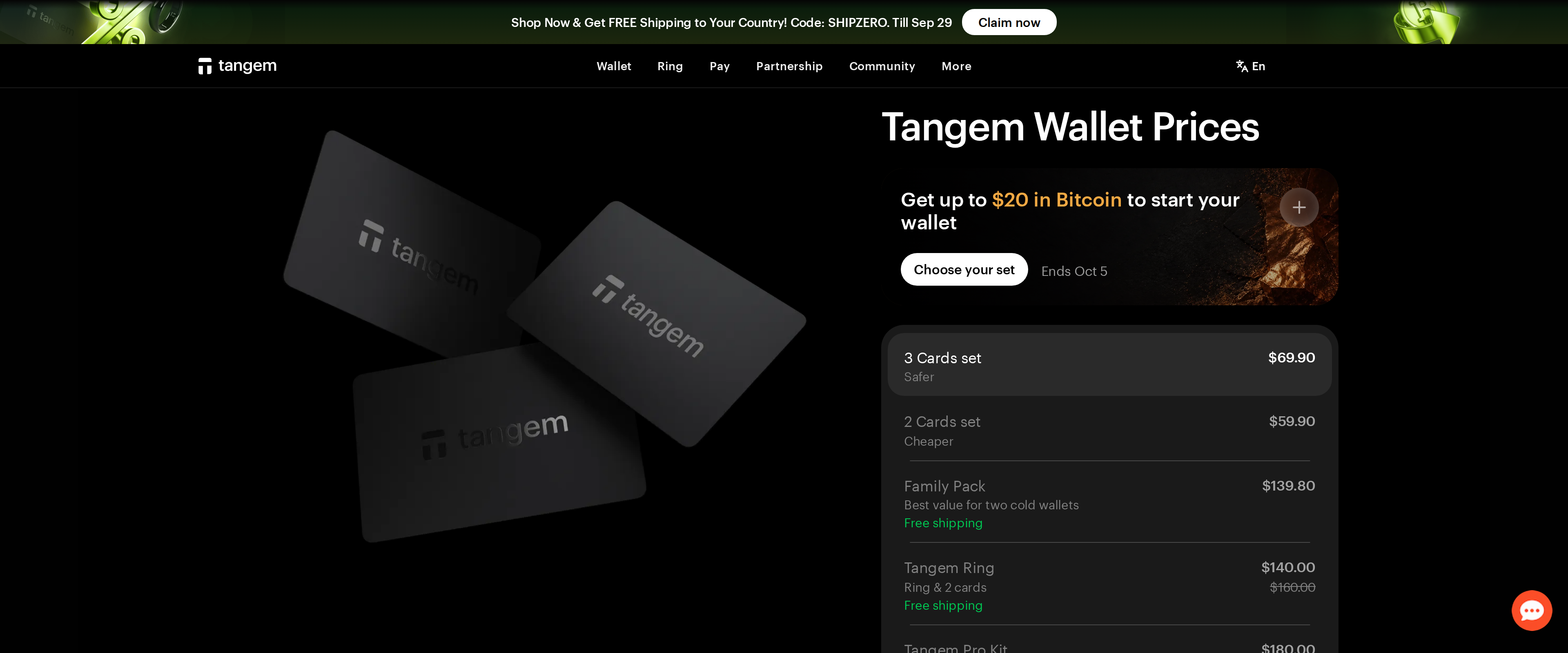
Both undercut most screen-based hardware wallets by a wide margin, and the Family Pack bundling a classic set with a second set at $129.80 is a reasonable way to equip two people at once. The Ring and Pro Kit push the price closer to what a Ledger costs, at which point the seedless design is the main thing you are paying extra for rather than the price advantage.
Verdict
Tangem solves a real problem, the seed phrase, cleanly and cheaply, and the independent audit trail backs up the chip's certification rather than just repeating Tangem's own marketing. The July 2026 laser disclosure is a legitimate mark against it, but it describes a lab attack, not a practical one, and the bigger risk remains what it always was with a seedless design: losing every card at once with nothing to fall back on. Buy the three-card set, keep the cards in separate places, and this is a safe, inexpensive way to hold crypto without ever writing down a seed phrase. Nothing here is financial advice; it is a record of setting the wallet up and reading its security history ourselves.
Pros and cons
Pros
- Setup took about two minutes over NFC with nothing to write down, transcribe or photograph.
- The Samsung-made secure element is EAL6+ certified, one tier above the chip in Ledger's Nano X.
- Tangem states zero of the roughly 6 million cards issued since 2017 have been hacked in the field.
- A two-card set costs $59.90 and a three-card set $69.90, well under most screen-based hardware wallets.
Cons
- There is no seed phrase; lose every card in a set and the funds are gone with no recovery path.
- A July 2026 disclosure showed a laser attack could reset a card's password without the existing code, though it needs lab equipment and physical possession.
- The card has no screen, so a compromised phone could still show a false destination address at signing time.
- There is no desktop app or deep native DeFi tooling, unlike screen-based wallets built for power users.
Tested and written by The Ordertide Test Desk. Published , updated . This review is not financial advice. How we review.