Hardware Wallets, ranked
Scores come from the same four weighted criteria on every product. Tap a row to read the full review, with every fee we paid.
4 reviews
| Rank | Review | Score | Category | Price | Maker | Link |
|---|---|---|---|---|---|---|
| 01 | 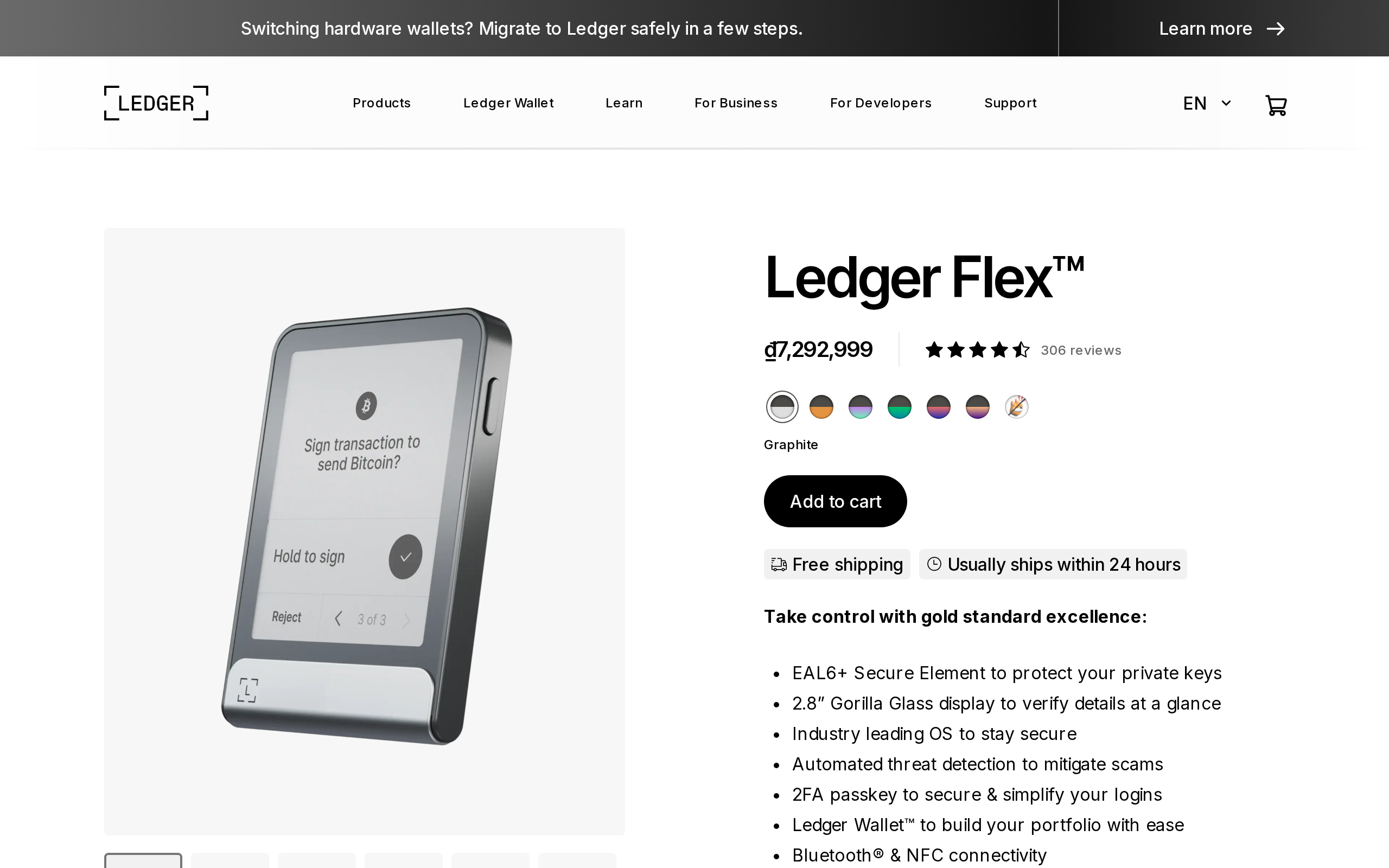 Ledger FlexThe Ledger Flex is the better piece of hardware: a bigger EAL6+ secure element, a touchscreen you can actually read a full address on, and NFC that a Nano X does not have. None of that changes what you are protecting, a private key, and a Nano X protects the same key for $100 less. Buy the Flex if you sign transactions often enough that the screen matters daily; buy a Nano if a wallet mostly sits in a drawer. Ledger FlexThe Ledger Flex is the better piece of hardware: a bigger EAL6+ secure element, a touchscreen you can actually read a full address on, and NFC that a Nano X does not have. None of that changes what you are protecting, a private key, and a Nano X protects the same key for $100 less. Buy the Flex if you sign transactions often enough that the screen matters daily; buy a Nano if a wallet mostly sits in a drawer. | 8.1 | Hardware Wallets | $249 | Ledger | Read review |
| 02 | 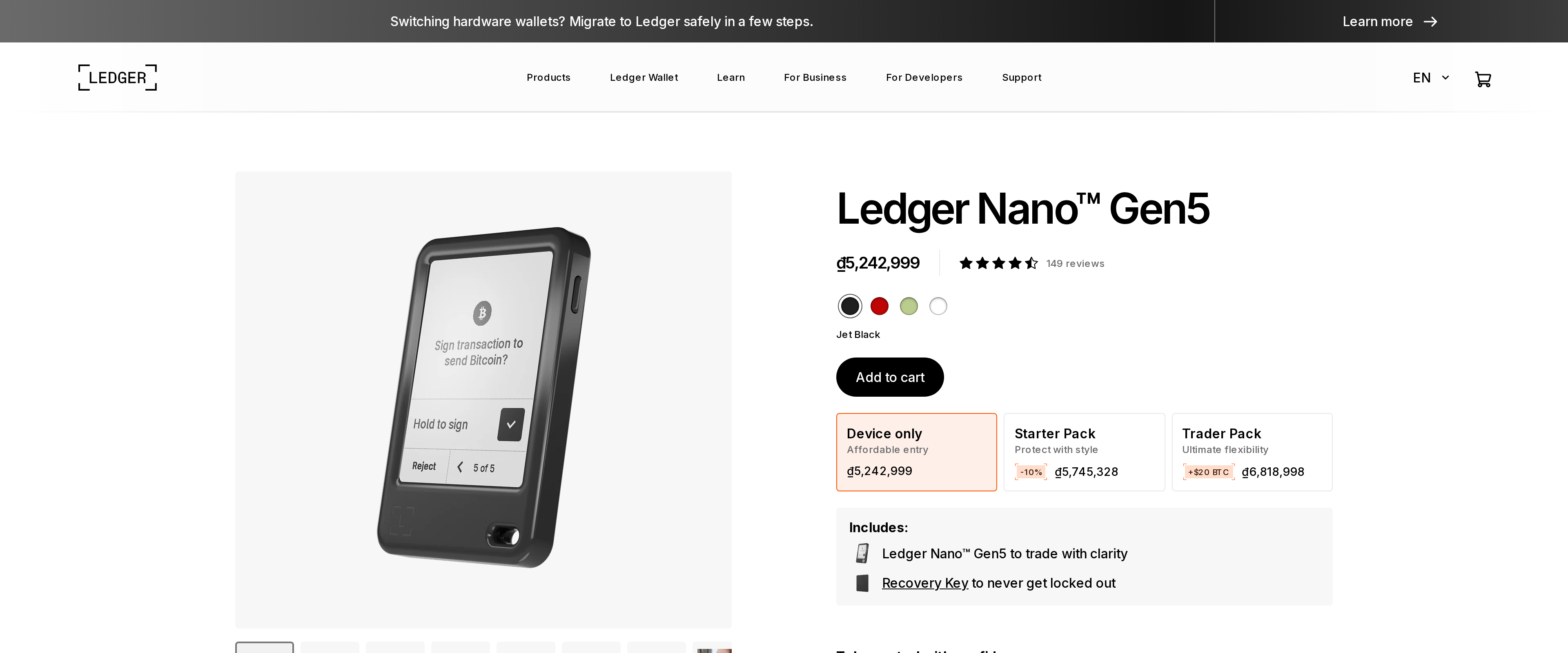 Ledger Nano Gen5The Nano Gen5 brings Ledger's touchscreen signing to its cheapest current model, and the same EAL6+ secure chip and Ledger OS the Flex runs. It stays worth $179 for anyone who does not need the Flex's larger, higher-contrast E Ink screen for reading long smart contract calls, and the $70 saved buys a lot of coffee for a device doing the same core job. Ledger Nano Gen5The Nano Gen5 brings Ledger's touchscreen signing to its cheapest current model, and the same EAL6+ secure chip and Ledger OS the Flex runs. It stays worth $179 for anyone who does not need the Flex's larger, higher-contrast E Ink screen for reading long smart contract calls, and the $70 saved buys a lot of coffee for a device doing the same core job. | 8.1 | Hardware Wallets | $179 | Ledger | Read review |
| 03 |  Tangem WalletTangem replaces the part of hardware wallet ownership people actually get wrong, writing down and hiding a seed phrase, with a chip that generates and holds the key on the card itself. Setup took two minutes with a phone's NFC reader and produced nothing to write down at all. The trade is total: there is no seed phrase backup, so losing every card in a set locks the funds permanently, and a disclosed laser attack in July 2026 showed the chip can be defeated in a lab, even if only with equipment and access no pickpocket carries. Buy it knowing both facts, not just the marketing one. Tangem WalletTangem replaces the part of hardware wallet ownership people actually get wrong, writing down and hiding a seed phrase, with a chip that generates and holds the key on the card itself. Setup took two minutes with a phone's NFC reader and produced nothing to write down at all. The trade is total: there is no seed phrase backup, so losing every card in a set locks the funds permanently, and a disclosed laser attack in July 2026 showed the chip can be defeated in a lab, even if only with equipment and access no pickpocket carries. Buy it knowing both facts, not just the marketing one. | 7.4 | Hardware Wallets | $59.90 for a two-card set, $69.90 for three | Tangem | Read review |
| 04 |  Trezor Safe 7The Safe 7 earns its place at the top of Trezor's range for anyone who signs transactions from a phone: the 2.5-inch touchscreen, encrypted Bluetooth and Qi2 charging genuinely change how the device is used day to day. What it does not do is prove a security advantage over the $169 Safe 5, and a disclosed laser fault-injection weakness in the auditable TROPIC01 chip means the newest part is also the newest attack surface. Buyers who sign mostly from a desk should save $80 and buy the Safe 5 instead. Trezor Safe 7The Safe 7 earns its place at the top of Trezor's range for anyone who signs transactions from a phone: the 2.5-inch touchscreen, encrypted Bluetooth and Qi2 charging genuinely change how the device is used day to day. What it does not do is prove a security advantage over the $169 Safe 5, and a disclosed laser fault-injection weakness in the auditable TROPIC01 chip means the newest part is also the newest attack surface. Buyers who sign mostly from a desk should save $80 and buy the Safe 5 instead. | 7.4 | Hardware Wallets | $249 | Trezor (SatoshiLabs) | Read review |
The top 3 side by side
| Criterion | Ledger Flex | Ledger Nano Gen5 | Tangem Wallet |
|---|---|---|---|
| Our score | 8.1 | 8.1 | 7.4 |
| Best for | Owners who sign transactions often enough to want a full-size touchscreen and are willing to pay $249 for it. | Buyers who want touchscreen signing and Bluetooth without paying for the Flex's bigger screen | Buyers who want cold storage without managing a seed phrase and will keep at least one backup card somewhere separate. |
| Price | $249 | $179 | $59.90 for a two-card set, $69.90 for three |
| Maker | Ledger | Ledger | Tangem |
| Category | Hardware Wallets | Hardware Wallets | Hardware Wallets |
| Verdict | The Ledger Flex is the better piece of hardware: a bigger EAL6+ secure element, a touchscreen you can actually read a full address on, and NFC that a Nano X does not have. None of that changes what you are protecting, a private key, and a Nano X protects the same key for $100 less. Buy the Flex if you sign transactions often enough that the screen matters daily; buy a Nano if a wallet mostly sits in a drawer. | The Nano Gen5 brings Ledger's touchscreen signing to its cheapest current model, and the same EAL6+ secure chip and Ledger OS the Flex runs. It stays worth $179 for anyone who does not need the Flex's larger, higher-contrast E Ink screen for reading long smart contract calls, and the $70 saved buys a lot of coffee for a device doing the same core job. | Tangem replaces the part of hardware wallet ownership people actually get wrong, writing down and hiding a seed phrase, with a chip that generates and holds the key on the card itself. Setup took two minutes with a phone's NFC reader and produced nothing to write down at all. The trade is total: there is no seed phrase backup, so losing every card in a set locks the funds permanently, and a disclosed laser attack in July 2026 showed the chip can be defeated in a lab, even if only with equipment and access no pickpocket carries. Buy it knowing both facts, not just the marketing one. |